
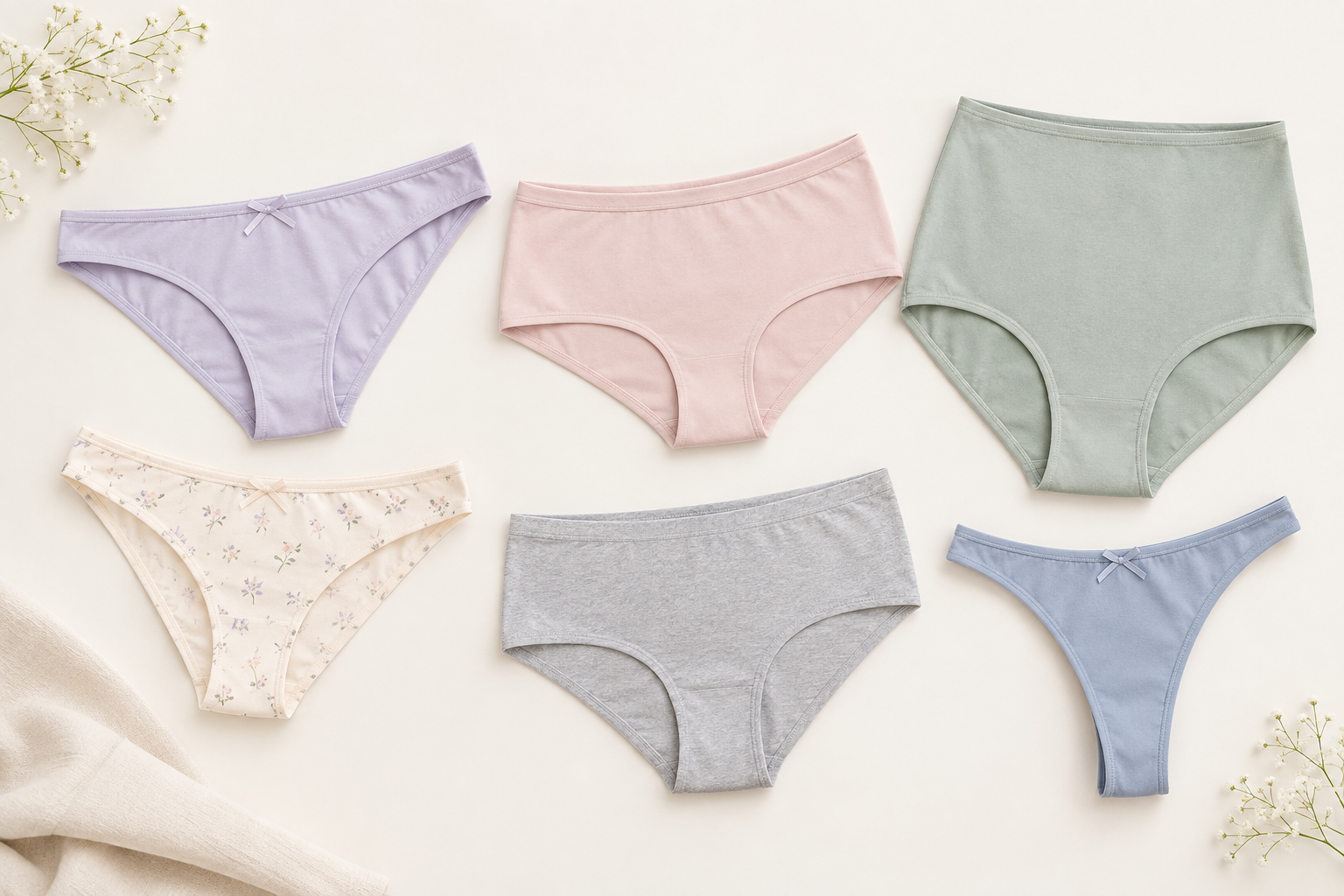
Why Is Choosing the Right Underwear So Important?
The garment you are in contact with for the longest time throughout the day is most likely your underwear. When chosen correctly, you barely notice it's there; when chosen incorrectly, it can cause discomfort, marks, or irritation throughout the day. So what does the "right" underwear actually mean? The answer varies from person to person: depending on your size, the outfit you're wearing, your activity, and your personal preference, different styles may stand out.
This guide was prepared to answer the questions that confuse you when shopping for lingerie and underwear and to help you make the right choice for you.
Underwear Styles: Which One Is Right for You?
There are many different underwear styles on the market. Each has its own advantages and ideal use cases.
Bikini Brief
With a mid-rise waistband and standard leg opening, this style is one of the most popular choices. It's suitable for everyday wear and pairs well with most outfits. It's not too tight and not too loose — it offers a balanced fit.
Full Brief (Slip)
With a high waist and full coverage at the back, this style supports the stomach area and is particularly preferred under skirts or wide-leg trousers. It also provides extra warmth in cold weather.
Thong and G-String
These styles with minimal back coverage are chosen to avoid visible panty lines under tight or thin-fabric outfits. Comfort during extended wear varies from person to person and may require some getting used to.
Hipster Brief
With a waistband sitting at or just below the hip, this style offers an invisible fit especially when paired with high-waisted jeans or activewear. The wider leg opening allows for greater freedom of movement.
High-Waist Brief
Growing in popularity in recent years, this style wraps and supports the stomach area. When worn with a crop top or short t-shirt, being visible can even become a style statement.
Boyshort
With a longer, fuller leg cut, this style is ideal for those who want to prevent chafing under a skirt. It is also frequently preferred for sports activities.
Fabric Choice: The Foundation of Comfort
Fabric is just as important as style. The wrong fabric choice can lead to irritation, moisture build-up, and odor problems.
Cotton
Breathable, hypoallergenic, and the safest option for everyday use. It should be the first choice for sensitive skin and extended wear. Having a cotton gusset in the crotch area is particularly recommended for health reasons.
Modal and Bamboo
Softer and lighter than cotton, these fabrics also perform well in moisture management. They are a good alternative for sensitive skin.
Microfiber and Synthetic Blends
Thanks to their thin, smooth texture, they leave no visible panty lines under clothing. However, their breathability is lower than cotton; for this reason, they may be better suited for special occasions or specific outfits rather than extended daily wear.
Lace
Aesthetically preferred, lace is usually made from synthetic materials. It can cause irritation on sensitive skin; therefore, make sure the gusset area has a cotton lining.
For more information on fabric properties and care instructions, you can check out our Fabric and Care Guide.
How to Choose the Right Size
Hip and waist measurements are generally used to determine underwear size. However, size charts can vary from brand to brand, so checking the relevant brand's size chart with every purchase is the most reliable approach.
- Too small: Leaves marks on the legs and waistline and may negatively affect circulation.
- Too large: Slides, bunches up, and may become visible under clothing.
- Correct size: Stays in place when you move, doesn't dig in, and leaves no marks.
For more help with sizing and measurements, you can visit our Size and Fit Guide page.
Common Mistakes
Some mistakes made without realizing it when buying underwear can negatively affect both comfort and health.
- Choosing based on appearance alone: Aesthetics matter, but comfort and fabric quality should come first.
- Skipping the size chart: Placing an order without checking the size chart — especially when shopping online — is a frequently made mistake.
- Using the same style for all activities: Different styles may be more appropriate for working out, being at the office, and special occasions.
- Buying without a cotton gusset: A cotton-lined gusset is especially important for those with sensitive skin.
- Continuing to wear worn-out underwear: Underwear that has lost its elasticity, lost its shape, or faded in color causes problems in terms of both comfort and hygiene.
- Washing incorrectly: Washing at high temperatures quickly destroys the elasticity of fabrics containing elastane. Following the label instructions extends the life of the product.
Practical Checklist
Keep the following points in mind for your next underwear purchase:
- ✔ Have I thought about what outfit I'll be wearing it under? (Tight trousers, skirts, sports leggings, etc.)
- ✔ Have I checked the fabric content? Is the gusset area cotton?
- ✔ Have I looked at the brand's size chart?
- ✔ Is it for everyday use, a special occasion, or sport? Is the style suited to my purpose?
- ✔ Have I read the care instructions? Is it machine washable?
- ✔ Are the elastic edges seamless or seamed? (Seamless may be preferable for sensitive skin.)
Frequently Asked Questions
What is the best underwear style for everyday use?
For everyday use, cotton bikini briefs or hipster styles are the most comfortable options for most people. They allow freedom of movement and reduce the risk of irritation during extended wear.
Which underwear leaves no visible lines under tight clothing?
Thongs, G-strings, or seamless microfiber styles are the options that leave the least visible lines under tight clothing. However, comfort during extended wear varies from person to person.
How often should underwear be changed?
As a general hygiene rule, wearing fresh underwear every day is recommended. The garment itself should be replaced when it loses its elasticity, loses its shape, or the fabric starts to thin out.
What underwear should be preferred during pregnancy?
During pregnancy, styles that don't constrict the stomach area, are high-waisted, and made from stretchy fabric should be preferred. You can find options specifically designed for this period in the maternity wear category.
Which styles are more suitable for plus sizes?
For plus sizes, styles with wide elastic bands, non-slip leg openings, and support for the stomach area are recommended. You can browse options tailored to this need in our plus-size clothing category.