
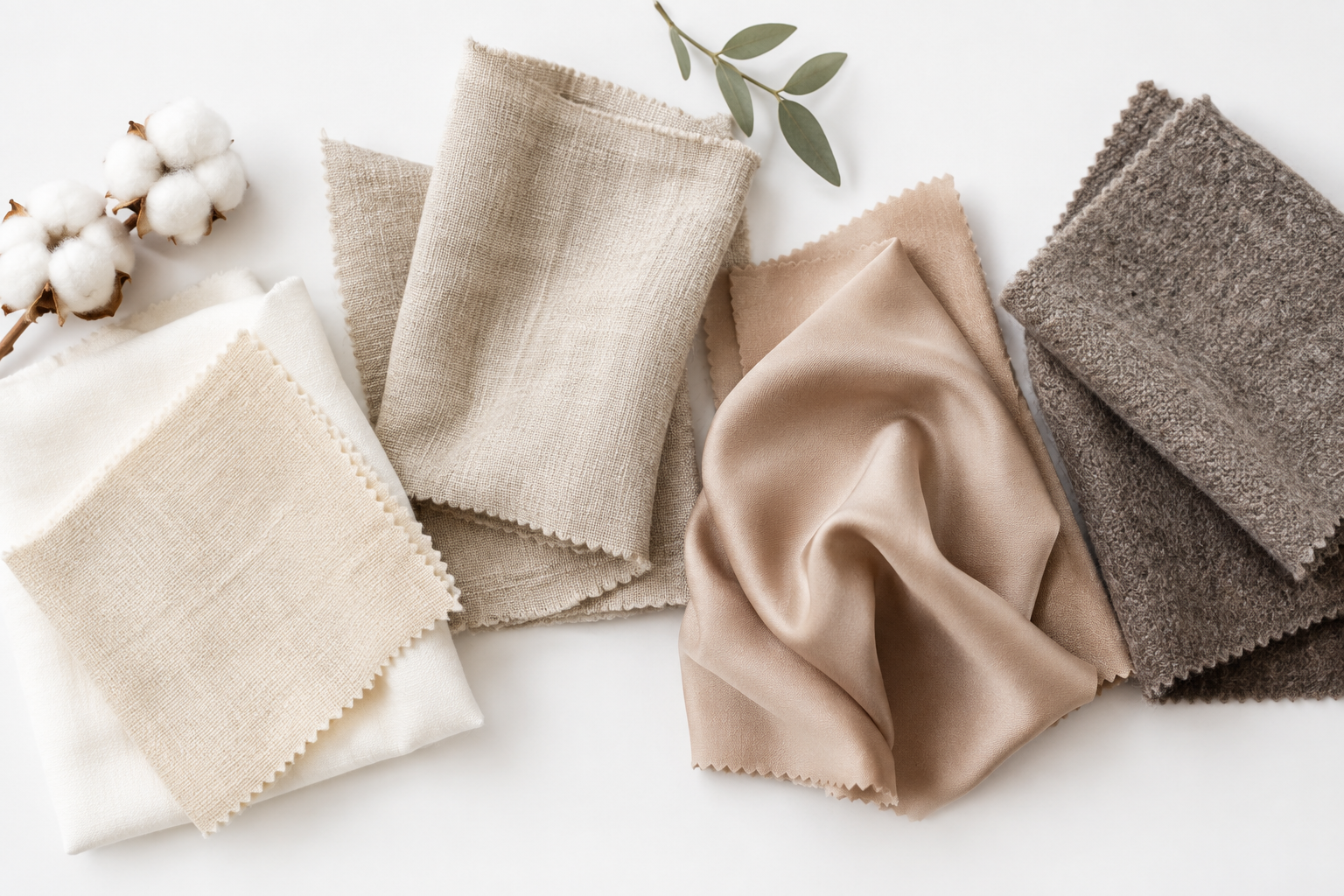
Why Is Fabric Choice So Important?
When buying a piece of clothing, we first look at the style, color, and price. Yet what usually determines long-term satisfaction is the fabric. The right fabric keeps you comfortable throughout the day, looks great on your body, and can last for years with proper care. The wrong fabric, on the other hand, can lose its shape after the first wash, cause you to sweat, or irritate your skin.
In this guide, we explain the most common fabric types, when to choose each one, and the care requirements of every fabric in plain language. Our goal is to give you information that will genuinely be useful when shopping and organizing your wardrobe.
The Most Common Fabric Types and Their Characteristics
Cotton
Cotton is a natural fiber and one of the most preferred fabrics thanks to its breathability and softness. It is safe for sensitive skin and has a cooling effect during summer months. Its downsides are that it wrinkles easily and some types may shrink in the wash. The vast majority of products in the T-shirts and tops category are made from cotton or cotton blends.
Viscose (Rayon)
Viscose is a semi-synthetic fiber that stands out for its silky appearance and lightness. Its fluid drape makes it a popular choice for blouses, dresses, and summer pieces. However, it becomes delicate when wet, so hand washing or a delicate cycle is recommended. When browsing blouses and shirts, it is worth paying attention to viscose-content styles.
Polyester
Polyester is the most common synthetic fiber. It is durable, dries quickly, and resists wrinkling. That said, its breathability is low and it can feel uncomfortable in hot weather. Special polyester types used in sportswear (moisture-wicking) largely solve this problem. Polyester blends are very common in sportswear products.
Linen
Linen is a natural, cool fabric and an essential for summer months. Its breathability is very high, though it wrinkles quickly. Accepting wrinkles as part of linen's natural character makes it easier to embrace this fabric. For those who prefer linen in skirt and trouser styles, it is a light and comfortable option.
Wool and Acrylic
Wool provides natural thermal insulation and delivers outstanding performance in cold weather. Quality wool products can be used for many years. Acrylic is the more affordable synthetic alternative to wool; it is easier to care for but does not breathe as well as natural wool. When buying sweaters and cardigans, paying attention to the wool content is the easiest way to gauge quality.
Silk
Silk is the most luxurious of all natural fibers. It can be worn in all four seasons thanks to its ability to keep you both cool and warm. Its care is delicate; it requires dry cleaning or hand washing in cold water. Silk and silk-look fabrics appear frequently in the evening wear and occasion dressing category.
Key Criteria to Consider When Choosing a Fabric
Choose According to Intended Use
Cotton and cotton blends are ideal for everyday wear. Viscose, silk, or satin can be preferred for special occasions. Moisture-wicking synthetic fabrics are more functional for sports activities. When choosing everyday clothing, it makes sense to prioritize comfort and durability.
Choose a Fabric Suited to the Season
In summer, opt for cotton, linen, and lightweight viscose. In winter, wool, cashmere, and fleece blends will keep you warm. For spring and autumn, medium-weight cotton blends and fine knits are ideal. You can find more tips on this in our seasonal style guide.
Consider Ease of Care
If you lead a busy life, pieces that require dry cleaning or hand washing may not be practical. Checking label information while shopping prevents disappointment later on.
Pay Attention to Fabric Weight
The same type of fabric can be produced in different weights. Lighter-weight fabrics are more sheer and airy, while heavier-weight ones are more opaque and durable. The drape and coverage of a fabric becomes especially important when choosing plus-size clothing.
Common Mistakes in Fabric Care
- Washing without reading the label: Every fabric has a different washing temperature and cycle. Skipping the label can cause the fabric to shrink or become damaged.
- Drying at high temperatures: Natural fibers such as cotton and viscose can shrink at high heat. Allowing them to air dry naturally is the safest option whenever possible.
- Using the wrong ironing temperature: Silk and synthetic fabrics should be ironed at a low heat setting. High heat can cause permanent damage to these fabrics.
- Washing all clothes together: Separating dark and light colors prevents color bleeding. Washing delicate fabrics in a separate laundry bag extends their lifespan.
- Rubbing stains: Rubbing a stain causes it to spread. Gently blotting with a soft cloth is the correct approach.
- Leaving clothes wet for too long: Leaving washed clothes sitting in the machine creates conditions for odor and mold to develop.
A Practical Checklist for Fabric Care
- ✅ Read the product label while shopping and check the washing symbols.
- ✅ Wash clothes separately by color and fabric type.
- ✅ Use a laundry bag for delicate fabrics.
- ✅ Do not use too much detergent; excess detergent damages fabric.
- ✅ Wash at a low temperature whenever possible; it protects the fabric and saves energy.
- ✅ Dry clothes in the shade rather than in direct sunlight to prevent fading.
- ✅ Dry wool and knitted pieces on a flat surface; hanging them can distort their shape.
- ✅ Store clothes clean and dry if you will not be wearing them for a long time.
- ✅ Ventilate your wardrobe; enclosed, damp environments damage fabric.
Choosing the right fabric and caring for it regularly is the most effective way to keep your wardrobe fresh for longer. When building a capsule wardrobe, prioritizing high-quality, easy-care fabrics helps protect both your budget and your time.