
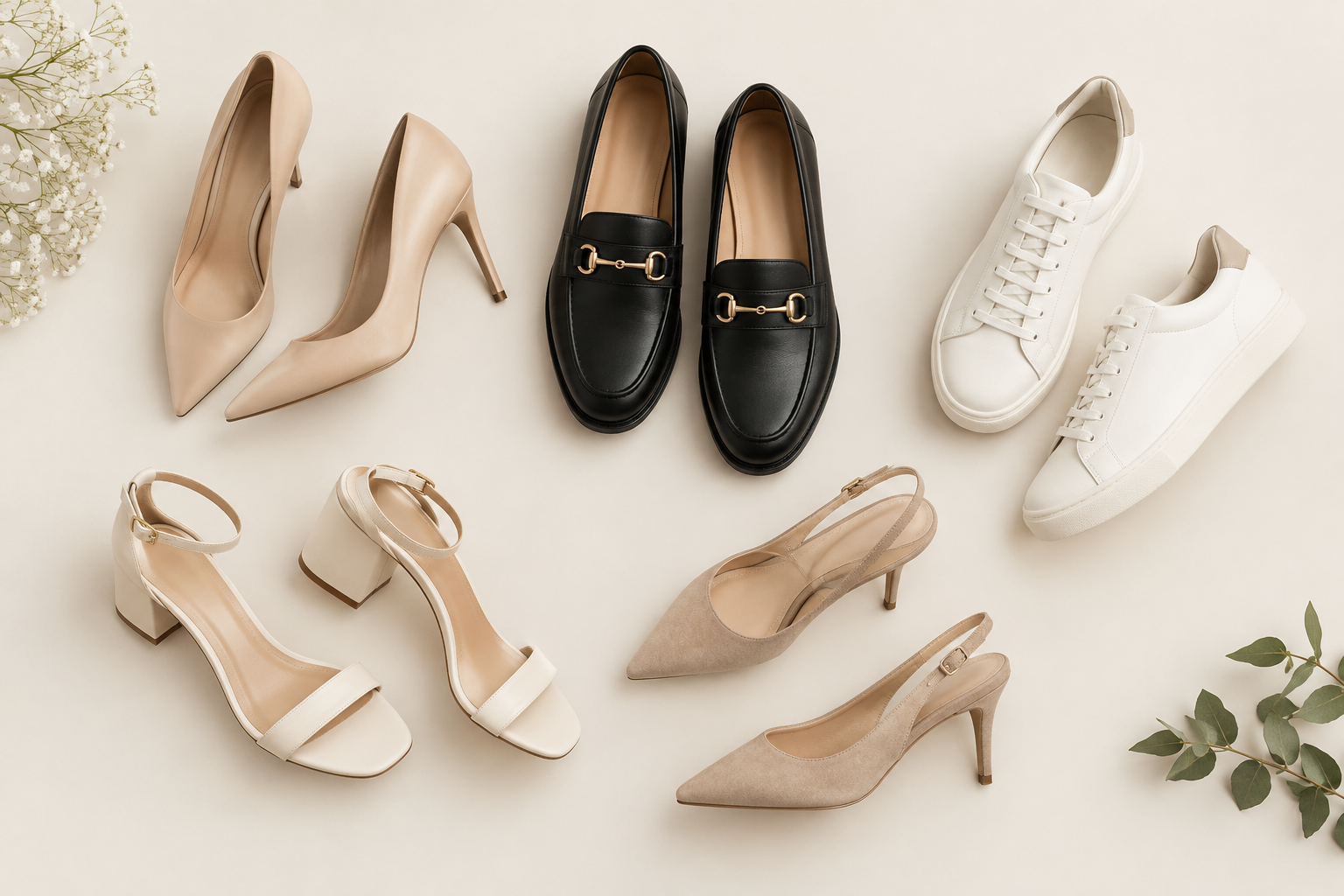
Why Is Choosing the Right Shoe So Important?
A shoe is not only the finishing touch to an outfit — it also directly affects your everyday comfort. The wrong shoe can negatively impact your back, knees, and foot health, and increase fatigue throughout the day. On the other hand, the right pair of shoes completes your style and keeps you walking comfortably for hours.
This guide was prepared to explain — in plain language — what to look for when buying shoes, which model suits which occasion, and the most common mistakes people make. Whether you're looking for everyday shoes or something special for an event, you'll find practical information here that will come in handy.
Key Criteria to Consider When Choosing the Right Shoe
1. Define Your Purpose
The first step in choosing a shoe is clarifying where and how you'll wear it. Your needs for daily walking, an office environment, a special event, or a sports activity are quite different from one another.
- Everyday use: Flat or low-heeled models provide long-lasting comfort.
- Office environment: Closed-toe heels or elegant loafer styles are a good choice.
- Events and special evenings: Stilettos, platform heels, or elegant sandal styles stand out. It's important to think of the outfit as a whole when choosing shoes to match evening and event wear.
- Sports and active use: Supportive soles and breathable materials should be the priority. Choosing shoes that complement your sportswear preferences ensures both visual and functional cohesion.
2. Pay Attention to Size and Fit
Shoe sizing works differently from clothing sizing and can vary from brand to brand. To find the right size, keep the following in mind:
- Measure your feet later in the day; feet tend to swell slightly throughout the day.
- There should be approximately one finger's width of space between your toes and the front of the shoe.
- The heel area should feel snug but not uncomfortable; if your foot doesn't slip inside, the fit is correct.
- If there is a difference between your two feet, choose the size based on the larger foot.
For more information on sizing, you can visit our Size and Fit Guide page.
3. Evaluate Material and Quality
The outer surface, inner lining, and sole of a shoe are decisive factors in terms of durability, comfort, and ease of care.
- Leather and faux leather: Leather molds to your foot over time and is long-lasting. Faux leather is more affordable but has lower breathability.
- Textile and fabric: Provides lightness in summer styles; however, resistance to water and dirt is lower.
- Sole quality: Rubber soles prevent slipping and last a long time. Thin plastic soles can wear out quickly.
For more detailed information on fabric and material selection, you can visit our Fabric and Care Guide page.
4. Choose the Right Heel Height
Heel height matters both aesthetically and for your health. As a general guide:
- 0–3 cm (flat): Ideal for long walks and everyday use.
- 3–5 cm (low heel): A balanced choice for office and everyday smart outfits.
- 5–8 cm (mid heel): Suitable for special events and dinner occasions.
- 8 cm and above (high heel): Best reserved for short-term wear; caution is advised in environments that require prolonged walking.
5. Think About Color and Outfit Compatibility
The shoes that add the most value to your wardrobe are those that can be worn with more than one outfit. Neutral tones (black, beige, white, brown) offer versatile use. Colorful or printed styles add a focal point to an outfit.
For outfit inspiration, you can visit our Outfit Ideas page.
Common Mistakes When Buying Shoes
Many people repeat the same mistakes when buying shoes. Being aware of these mistakes will help you make more informed choices:
- Deciding based on looks alone: A shoe you love the look of but that doesn't fit your foot properly will eventually become an unused investment.
- Not trying the shoe on long enough in the store: Taking a few steps in the shop is not enough; if possible, walk on different surfaces.
- Buying tight shoes expecting them to "break in": Some materials can stretch; however, there's no guarantee that a shoe that's uncomfortable from the start will ever fit perfectly.
- Ignoring the season and setting: Pairing a summer sandal with a winter outfit, or going on a long walk in thin-soled shoes, are among the most common mistakes.
- Not thinking about care requirements: Light-colored or delicate-material shoes in particular require regular maintenance. If you're not prepared for that, you may want to opt for a more practical style.
- Focusing only on price: Very cheap models may fall apart quickly, while very expensive ones don't always offer the best comfort. Evaluate the quality-to-price balance.
A Checklist to Use When Buying Shoes
Before heading out to shop or placing an online order, ask yourself these questions:
- In what setting and how often will I wear these shoes?
- Do I know my correct size and fit information?
- Is the material suitable for everyday use and easy to care for?
- Does the heel height match my intended use?
- Do I have at least 3 outfits in my wardrobe that I can wear with these shoes?
- What are the return and exchange conditions for online purchases?
- Have I also considered this style in a different color?
Once you make this checklist a habit, you'll notice a significant reduction in the number of unworn shoes in your wardrobe.
Frequently Asked Questions
How do I measure my shoe size?
You can trace your foot on a piece of paper or measure it with a ruler, then compare the measurement against size charts. Measuring later in the day gives more accurate results, as feet tend to swell slightly throughout the day. If there is a difference between your two feet, choose the size based on the larger foot.
What should I watch out for when buying shoes online?
Always check the brand's size chart; the same size number can correspond to different fits across different brands. Pay attention to feedback about fit and comfort in product reviews. Find out the return and exchange policy in advance.
Is it possible to wear high heels more comfortably?
Yes, a few practical measures can make a real difference: thick-soled or platform heel styles provide a more balanced stance. Adding gel insoles or heel pads can increase comfort. It's also helpful to get used to heels gradually with short periods of wear before committing to wearing them for extended periods.
How can I make my shoes last longer?
Regular cleaning and proper storage conditions extend the life of your shoes. Use specialist care products for leather styles. Store your shoes in their boxes or in dust bags. Rather than wearing the same pair every day back to back, rotate them; this allows the material to breathe and slows down wear.
Which shoe style goes with the most outfits?
A closed-toe shoe in black or beige tones with a flat or low heel is among the most versatile options. White sneakers have also become a popular choice in recent years for both casual and semi-formal outfits. You can browse styles suited to different purposes in our Shoes category.