
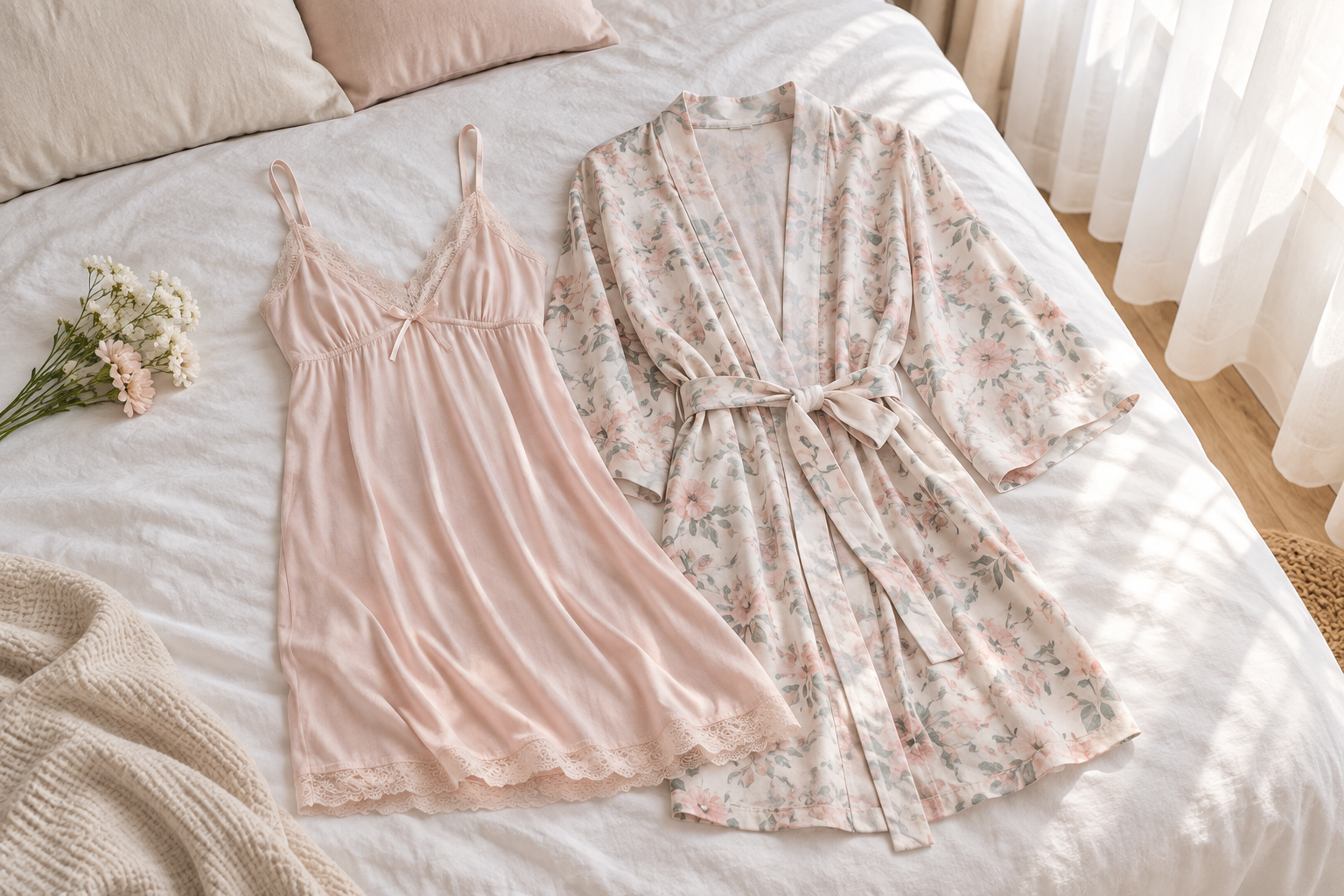
Why Are Nightgowns and Robes So Important?
Giving the same attention to our nightwear that we give to our daytime clothing directly affects both sleep quality and morning mood. Choosing a nightgown and robe is not merely an aesthetic preference—it is also a meaningful decision in terms of comfort, health, and personal care.
A well-chosen nightgown lets your skin breathe, doesn't restrict your movement, and helps regulate body temperature during sleep. A robe, meanwhile, keeps you warm while making your morning routine more enjoyable. So what should you look out for when making this choice?
Key Criteria for Choosing a Nightgown and Robe
1. Fabric Choice: The Most Critical Step
In nightgowns and robes, fabric is the primary determinant of comfort. Common fabric options and their characteristics can be listed as follows:
- Cotton: Breathable, hypoallergenic, and durable through washing. Suitable for all seasons; ideal for sensitive skin.
- Modal and Bamboo: Provides a silky feel with good moisture management. A great choice in warm weather.
- Satin and Silk: Offers a luxurious feel, but requires more careful maintenance. May not provide enough warmth in cooler weather.
- Flannel and Fleece: Ideal for winter months; thick and heat-retaining. However, it can feel stifling in warmer seasons.
- Viscose: Lightweight and flowy; frequently used in summer nightgowns. Pay close attention to washing instructions.
For more information about fabric choices, you can visit our Fabric and Care Guide page.
2. Style and Cut: Choose According to Your Purpose
Nightgowns and robes come in a variety of styles. It is important to determine the right style based on your intended use:
- Short nightgown: Suitable for warm weather and those who want freedom of movement.
- Long nightgown: Ideal for winter months and those who prefer more coverage.
- Nightgown set (top + bottom): Similar to pajamas; both comfortable and practical.
- Kimono robe: Made from lightweight fabrics; suitable for summer use.
- Bathrobe-style robe: Thick and heat-retaining; preferred for winter mornings.
- Short robe: A practical option for those who want to move comfortably around the house.
3. Size and Fit: Comfortable but Not Baggy
Choosing the right size in nightgowns and robes can be evaluated a little differently from everyday clothing. The general rule is: opt for a fit that doesn't constrict the body but isn't excessively loose either. A nightgown that is too tight can restrict movement during sleep, while an overly baggy style can cause tangling and discomfort.
To accurately determine your measurements, you can check out our Size and Fit Guide page.
4. Choose According to the Season
In summer, short or lightweight long nightgowns made from thin, breathable fabrics should be preferred. In winter, long nightgowns and thick robes made from flannel, fleece, or heavy cotton will be more appropriate. During seasonal transitions, medium-weight fabrics such as modal or viscose provide a good balance.
5. Ease of Care
Since nightgowns and robes are worn daily, ease of care is important. Fabrics that are machine-washable, quick-drying, and iron-free are advantageous for practical use. Always check the care label on the product before purchasing.
Common Mistakes When Choosing a Nightgown and Robe
- Focusing only on appearance: Aesthetics matter, but comfort and fabric quality should not be overlooked.
- Ignoring the season: A thick nightgown bought for summer or a thin robe bought for winter will end up being impractical.
- Choosing a size too small: The body can swell during sleep, so a tight nightgown can cause discomfort.
- Opting for synthetic fabrics: Synthetic fabrics like polyester are not breathable and can cause sweating; they are especially not recommended for sensitive skin.
- Not reading care instructions: Incorrect washing—especially with satin or silk products—can damage the fabric.
- Not matching the robe to the nightgown: When a nightgown and robe are coordinated, they offer a better experience both aesthetically and practically.
Checklist When Buying a Nightgown and Robe
Ask yourself the following questions before shopping:
- ✅ Which season am I buying it for?
- ✅ Is the fabric breathable and suitable for my skin?
- ✅ Is the size right—neither too tight nor too loose?
- ✅ Is the style suited to my intended use (sleep, lounging at home, receiving guests)?
- ✅ Is it easy to care for; is it machine-washable?
- ✅ If I'm buying a robe, does it match my nightgown?
- ✅ Is it a quality fabric for long-term use?
To explore nightgown and robe options, you can browse our Nightgown and Robe category. For homewear alternatives, you can also visit our Homewear and Pajamas page.
Frequently Asked Questions
Which is more comfortable—a nightgown or pajamas?
This is entirely a matter of personal preference. Nightgowns are one-piece, so they have fewer layers and feel more comfortable for some people. With pajamas, the top and bottom are separate, which can make movement easier. Both can provide a comfortable sleep with the right fabric and size choice.
Can a robe be worn in every season?
Yes, but you should choose robes of different thicknesses depending on the season. Lightweight kimono-style robes are more suitable in summer, while thick bathrobe-style robes are better in winter.
Which fabric is the healthiest for a nightgown?
Cotton and bamboo are the safest options for sensitive skin. These fabrics are breathable, hypoallergenic, and excellent at moisture management.
What should I look for when choosing a plus-size nightgown?
For plus-size nightgown selection, stretchy fabrics and A-line cuts offer more comfortable wear. It is recommended to carefully review the size chart and, if necessary, go up one size. You can find more options on this topic in our Plus-Size Clothing category.
How often should nightgowns and robes be washed?
Nightgowns are recommended to be washed every day or at most every two days. Robes can be washed once a week to once every two weeks, depending on how frequently they are used.