
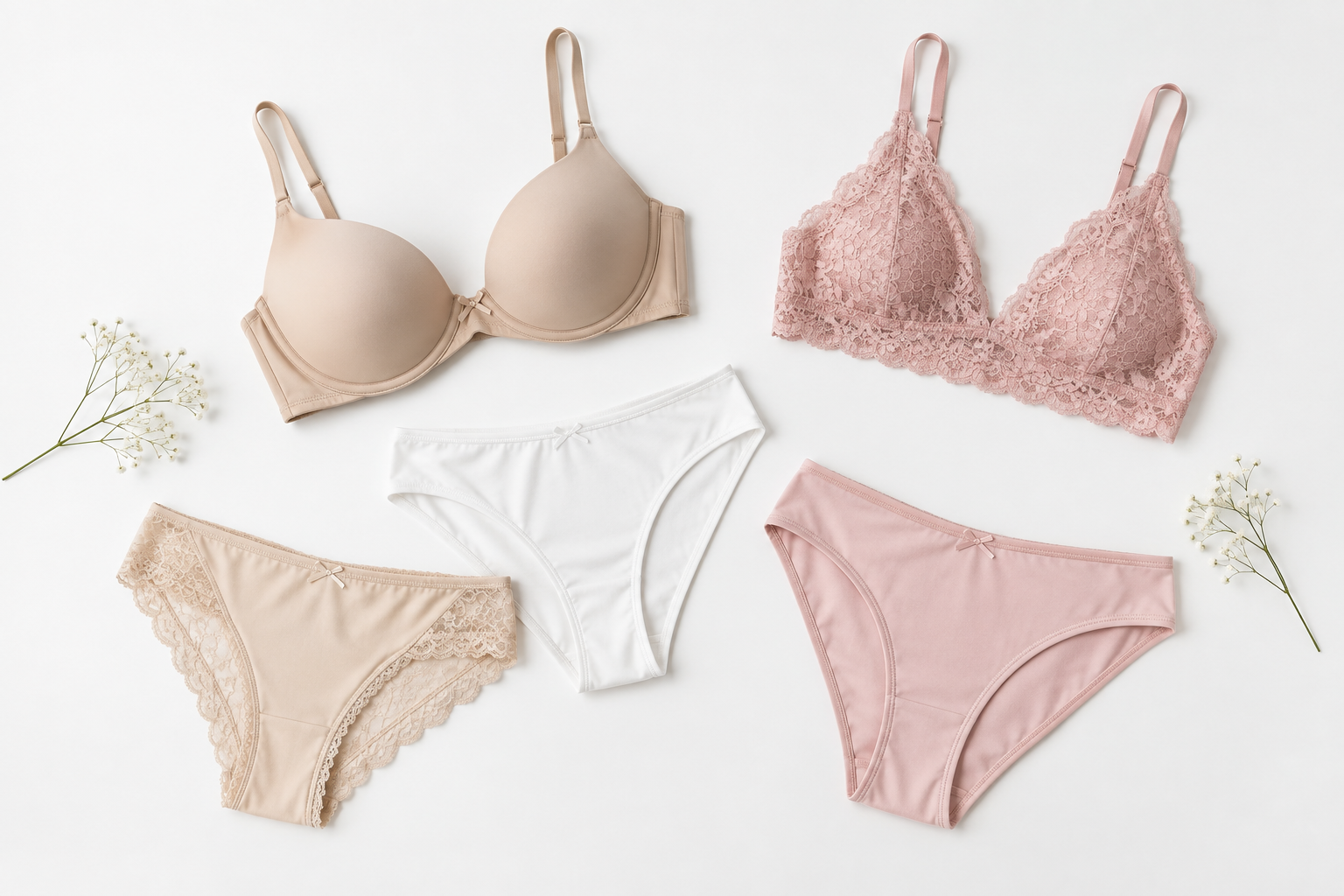
Answers to Your Lingerie Questions: Where to Begin?
Lingerie is the most overlooked yet most felt part of your wardrobe. Even though it's hidden from view, the comfort or discomfort you carry throughout the day comes directly from this choice. A wrong-size bra can cause back pain; unsuitable fabric can irritate sensitive skin. This guide was created to make lingerie shopping more informed and easier.
The lingerie category is quite broad: bras, underwear, bralettes and bustiers, corsets and shapewear, nightgowns and robes, garter belts and stockings are the main products in this category. The selection criteria for each differ from one another, so we'll cover the guide step by step.
Key Criteria for Choosing the Right Lingerie
There are several key areas to consider when making the right choice in lingerie:
1. Size and Measurements
The most common mistake in lingerie is choosing the wrong size. Especially with bras, both the cup size (A, B, C, D…) and the band size (70, 75, 80…) must be determined correctly together. Measuring yourself at home with a tape measure provides a much more reliable starting point than trying things on in a store. You can find detailed measurement steps on our Size and Fit Guide page.
For underwear and shapewear, waist and hip measurements are the determining factors. Items chosen too tight cause both discomfort and negatively affect your appearance.
2. Fabric Choice
In lingerie, fabric is a critical factor for comfort and health:
- Cotton: Ideal for everyday use thanks to its breathable structure; suitable for sensitive skin.
- Modal and bamboo: Stand out for being softer than cotton, moisture-wicking, and antibacterial.
- Microfiber: Its thin and smooth structure leaves no visible lines under outerwear; preferred for practical use.
- Lace and satin: Aesthetically appealing, but can be less comfortable for extended everyday wear.
For more information on fabric care and washing instructions, you can visit our Fabric and Care Guide page.
3. Intended Use
Clarifying the intended use when choosing lingerie makes it easier to find the right product:
- Everyday use: Comfort and durability are the priority; cotton, seamless styles can be preferred.
- Sports: High-support sports bras and moisture-managing fabrics are important. Our Sportswear category offers options tailored to this need.
- Special occasions: Lace, satin, or bralette styles can be preferred.
- Shaping: Corsets and shapewear are used to smooth the silhouette under certain outfits; however, breathability should be kept in mind during extended wear.
- Pregnancy and breastfeeding: The body changes rapidly during this period; flexible and specially designed styles should be preferred. You can find content dedicated to this topic on our Maternity Wear page.
4. Compatibility with Outerwear
When choosing lingerie, also consider the clothing you'll be wearing over it. Nude-colored lingerie shows far less under white or light-colored clothing compared to dark colors. Seamless styles should be preferred under thin-fabric dresses or blouses.
Common Mistakes
The most common mistakes in lingerie shopping are:
- Wearing the same size for years: Processes such as weight changes, pregnancy, or aging alter body measurements. It is recommended to re-measure yourself at least once a year.
- Choosing based on appearance alone: Aesthetics matter; however, without comfort and proper support, even the most beautiful lingerie will cause discomfort throughout the day.
- Ignoring washing instructions: Incorrect washing quickly ruins the shape and elasticity of lingerie. Hand washing or using a laundry bag is recommended for most lingerie items.
- Wearing a bra for too long: The bra band and padding lose their shape over time. As a general rule, replacing them every 6–12 months with regular use may be considered; however, this timeframe varies depending on frequency of use.
- Overlooking plus-size options: Suitable and stylish lingerie options exist for every size. You can find guidance on this in our Plus Size Clothing category.
- Treating price as the only criterion: Very cheap products generally contain low-quality fabric and weak stitching, which negatively affects both comfort and product lifespan.
Pre-Shopping Checklist
Before heading out to shop for lingerie, ask yourself these questions:
- ✅ What are my current measurements? (Waist, hips, bust circumference)
- ✅ What will I use it for? (Everyday, sports, special occasion, pregnancy…)
- ✅ What outerwear will I be wearing it under?
- ✅ Do I have skin sensitivities? (If so, cotton or modal should be preferred)
- ✅ Which of my current lingerie items need replacing?
- ✅ What is my budget and how many pieces am I planning to buy?
- ✅ If shopping online, what are the return conditions?
Reviewing this list before you shop helps prevent both unnecessary spending and disappointment.
Frequently Asked Questions
How do you measure bra size correctly?
Measure your underbust circumference (band measurement) and the fullest point of your bust with a tape measure. The difference between the two determines the cup size. For example, if the difference is 12–13 cm, a B cup is generally recommended; however, since this can vary from brand to brand, trying things on is always the most reliable approach.
What is the best lingerie fabric for everyday use?
Cotton and modal are the most preferred fabrics for everyday use. Their breathable structure and skin-friendly properties provide comfort during extended wear.
Can shapewear be worn every day?
Shapewear is designed for special occasions or specific outfits. Extended daily use is not recommended; care should be taken regarding breathability and blood circulation.
How often should lingerie be replaced?
This depends on frequency of use and the quality of the product. While there is no universal rule, it is recommended to replace items that have lost their elasticity, lost their shape, or faded. For bras, the condition of the band and padding is a good indicator.
What should I pay attention to when shopping for lingerie online?
Carefully review the size chart, read product reviews, and check the return policy in advance. When possible, it is safer to shop from brands you have tried before and whose sizing you already know.