
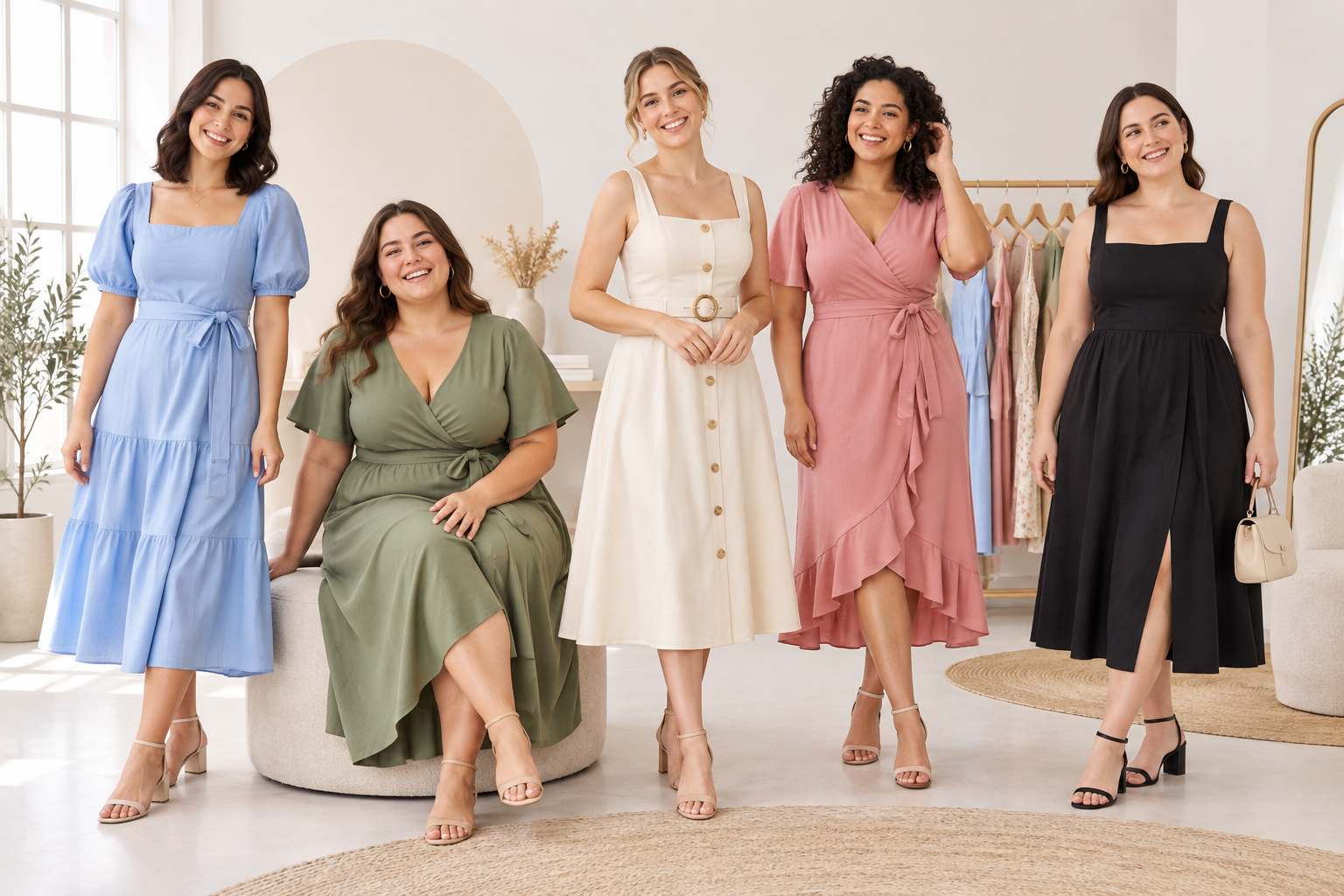
Despite being a single garment, a dress is one of the most practical clothing options that delivers a complete look. With the right dress, you can feel both stylish and comfortable without spending the morning wondering what to wear. Its versatility — from daily life to special events, from the office to the beach — makes it an indispensable part of any wardrobe.
What Should You Consider When Choosing the Right Dress?
Define Your Purpose
The first step in choosing a dress is clarifying where and how you'll wear it. The style you'd choose for everyday wear will be quite different from what you'd pick for a wedding or cocktail party. Defining your purpose in advance helps you protect your budget and find the right style.
Choose a Cut That Suits Your Body Type
Different body types can look and feel more comfortable and confident in different cuts. However, there is no single rule here — the most important criterion is that you feel good. In general, the following tips can be helpful:
- Hourglass figure: Dresses that emphasize the waist, belted or fitted cuts, create a harmonious look.
- Pear shape: A-line styles that are wider at the top and flowy at the bottom create a balanced silhouette.
- Apple shape: Dresses with V-necklines and empire waist details offer a comfortable and chic appearance.
- Rectangle shape: Details such as ruffles, ruching, or a belt help define the waistline.
For plus-size options, you can browse our dress category.
Season and Fabric Selection
In summer, breathable fabrics like cotton, viscose, and linen are ideal; in winter, thicker, lined, or velvet fabrics can be preferred. The quality of the fabric directly affects both comfort and the longevity of the dress.
Color and Pattern
Dark colors generally give a more understated and elegant look, while light colors and patterns can add an energetic vibe. Choosing colors that can easily be combined with other pieces in your wardrobe is a more functional choice in the long run.
Common Mistakes to Avoid
- Focusing only on trends and ignoring your personal style
- Shopping online without checking your measurements
- Choosing styles that don't match the intended occasion
- Buying without reading the fabric content
Dress Selection Checklist
- ✔ Has the purpose been defined?
- ✔ Have your measurements been checked?
- ✔ Is the fabric suitable for the season?
- ✔ Can it be combined with other pieces in your wardrobe?
- ✔ Have the care instructions been read?
For outfit ideas, visit our outfit suggestions page, and for seasonal style tips, check out our seasonal style guide.