
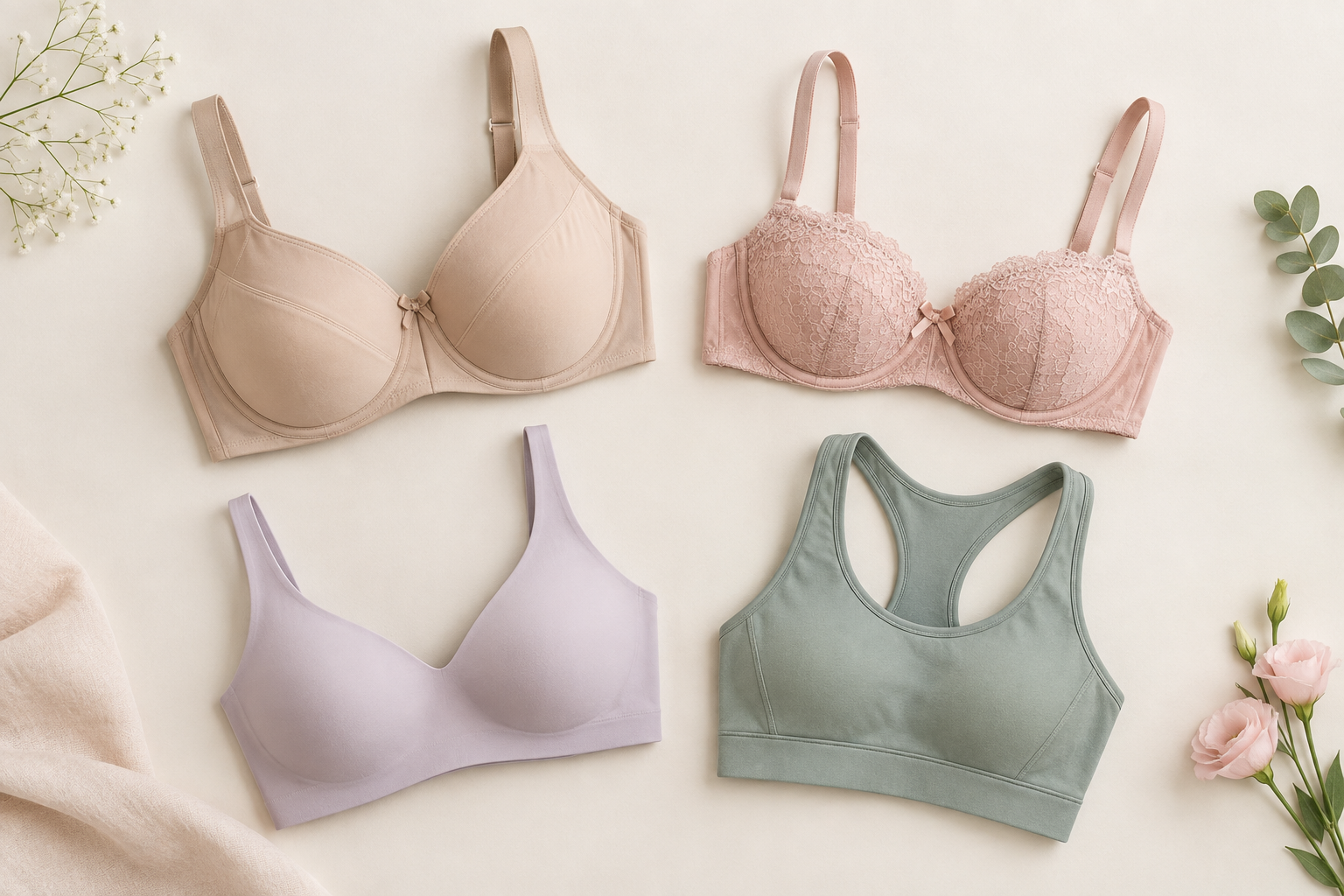
Why Is Choosing the Right Bra So Important?
Many women spend a large part of their day wearing a bra, so making the right choice truly makes a difference — both for physical comfort and overall well-being. The wrong size or wrong style can cause a range of problems, from shoulder pain to skin irritation. On the other hand, the right bra directly affects how your clothes sit and look on you.
This guide was created not to steer you toward a specific brand or product, but to help you better understand your own body and needs. Follow the steps below to make the best choice for yourself when shopping for lingerie.
Measuring Your Size: Everything Starts Here
Knowing your correct bra size is the most critical step in the selection process. In Turkey, bra sizes generally consist of two components: the underbust measurement (band size) and the cup letter derived from the difference between the bust and band measurements.
How to Measure Your Band Size
Measure around your torso directly under your bust — where the bra band sits. The tape measure should be level and horizontal, neither too tight nor too loose. If the number is odd, round up to the next even number. For example, if you measure 77 cm, your band size is 80.
How to Determine Your Cup Size
Measure around the fullest part of your bust. Subtract your band size from this measurement. The difference determines your cup size:
- ~1 cm difference → AA cup
- ~2–3 cm difference → A cup
- ~4–5 cm difference → B cup
- ~6–7 cm difference → C cup
- ~8–9 cm difference → D cup
- ~10–11 cm difference → E cup
- ~12–13 cm difference → F cup
These measurements provide a starting point; keep in mind that there may be slight differences between the fits of different brands. Whenever possible, trying before you buy is always the safest approach.
Bra Styles and When to Choose Each One
Every day, every outfit, and every body has different needs. Here are the most common bra styles and their uses:
Full Cup Bra
Provides full coverage and maximum support. Ideal for larger cup sizes. If comfort is your priority for everyday wear, this style is a great option.
Demi Cup Bra
Leaves the upper part of the bust exposed and pairs well with low-cut outfits. A better choice for medium and smaller cup sizes.
Balconette Bra
Supports the bust from the sides and underneath, creating a rounded appearance. The wide-set straps make the shoulders look more open. Works well with square-neck tops.
Push-Up Bra
Padding at the bottom lifts and centers the bust. Suitable for those who want to create a fuller effect with low-cut outfits.
Unlined / Bralette Bra
Its thin, lightweight construction makes it a comfortable option, especially for smaller cup sizes. Bralette and bustier styles also fall into this category and are becoming increasingly popular for everyday and at-home wear.
Sports Bra
Limits movement and provides support during physical activity. Available in low, medium, and high impact levels — choose based on the intensity of your activity. Selecting a sports bra that complements your sportswear preferences will enhance both your performance and comfort.
Seamless Bra
Leaves no visible lines under thin fabrics. Frequently preferred for everyday wear and combinations with t-shirts and tops.
Maternity and Nursing Bra
During pregnancy and breastfeeding, the bust both grows and becomes more sensitive. Styles specially designed for this period offer both support and practicality. You can explore options tailored to this need in the maternity wear category.
Selection Criteria and Practical Tips
Once you've found the right style, keep the following criteria in mind:
- Band fit: The bra band should sit straight and horizontal across your back. If it rides up, your band size is too large.
- Cup fill: The cups should neither overflow nor gape. Overflow means the cup is too small; gaping means it's too large.
- Bridge (center panel): The bridge between the two cups should lie flat against your chest and not float away from your body.
- Shoulder straps: Support should come primarily from the band; the straps only serve to guide. If the straps dig into your shoulders, your band size may be too large.
- Fabric choice: Cotton or bamboo-blend fabrics may be preferred for sensitive skin. Synthetic fabrics are generally more durable and hold their shape better.
- Hooks: A new bra should fit comfortably on the loosest hook; as the fabric stretches over time, you can move to a tighter hook.
Common Mistakes
The most frequently encountered mistakes when choosing a bra include:
- Wearing the same size for years: Factors such as weight changes, pregnancy, breastfeeding, and aging can alter your measurements. It is recommended to get measured at least once a year.
- Choosing a larger band and smaller cup: Going up in band size and down in cup size to get more support is a common mistake. Proper support comes from the correct band size.
- Buying without trying: Especially with online shopping, ordering without checking the return policy can lead to disappointment.
- Ignoring care instructions: Most bras are not suitable for machine washing. Incorrect washing damages both the shape and the elasticity.
- Making do with too few bras: Wearing the same bra every day causes the elasticity to break down quickly. Rotating between at least 3–4 bras extends their lifespan.
Practical Checklist
Before buying a new bra, ask yourself these questions:
- ✅ Have I correctly measured my band size and cup letter?
- ✅ What will I use this bra for? (Everyday, sports, special occasions, maternity, etc.)
- ✅ What outfits will I wear it under? (Thin fabric, deep neckline, open back, etc.)
- ✅ Is the band sitting straight across my back?
- ✅ Are the cups neither overflowing nor gaping?
- ✅ Is the bridge lying flat against my chest?
- ✅ Are the shoulder straps not digging into my shoulders?
- ✅ Is it comfortable on the loosest hook?
- ✅ Is the fabric irritating my skin?
- ✅ Have I checked the care instructions?
Choosing the right lingerie affects your entire wardrobe. Browse our bra category to explore different styles and sizes and find the option that suits you best.
Frequently Asked Questions
Below you'll find answers to the most commonly asked questions about choosing a bra.