
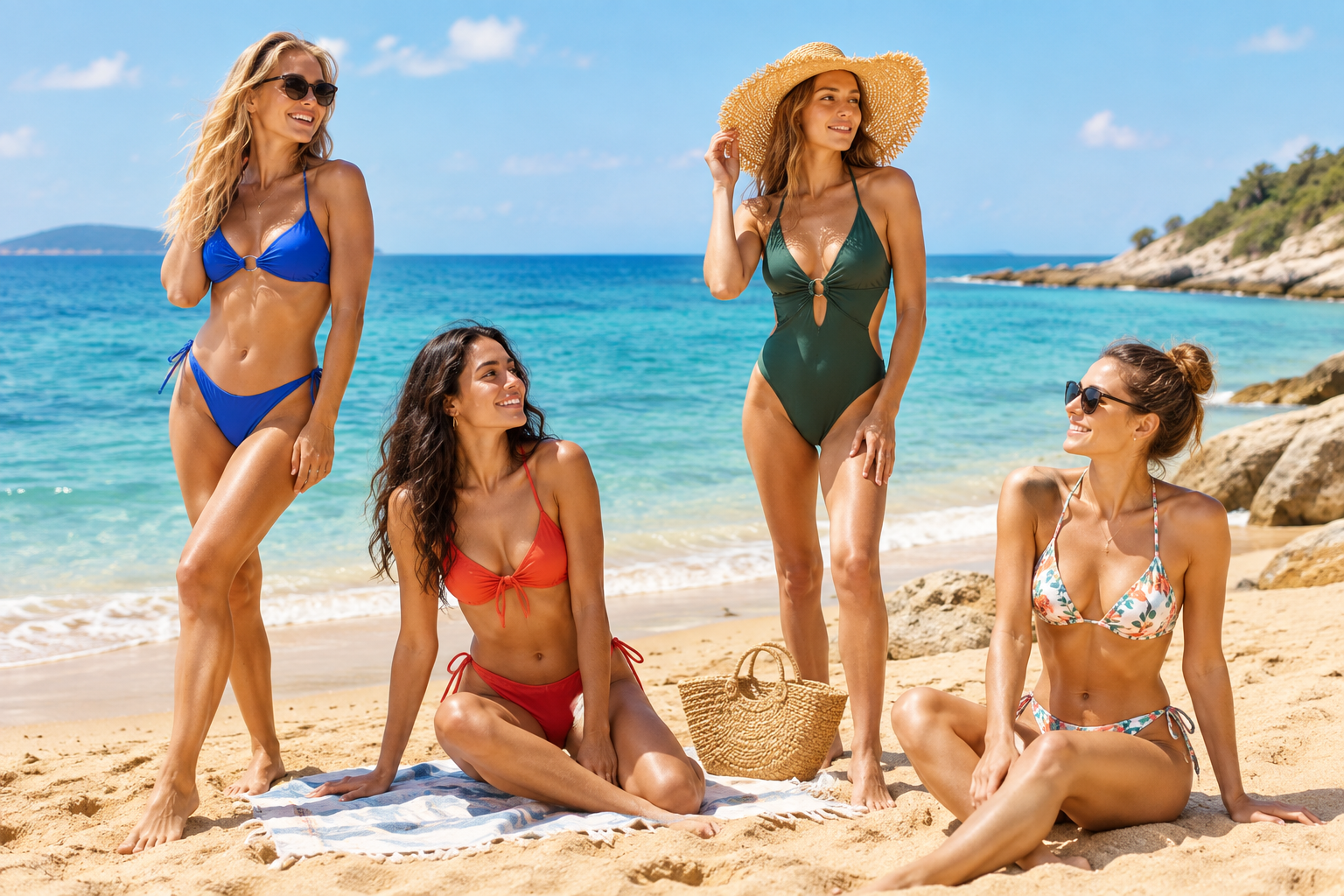
The Answer You're Looking for in Beach Clothing: What Should Guide Your Choice?
When it comes to beach clothing, the first question that usually comes to mind is: "What suits me?" But the more accurate question should actually be: "What makes me feel comfortable and good?" Choosing beach attire is a multi-layered decision shaped by body type, activity, sun protection needs, and personal style.
The main categories of beach clothing are:
- Swimsuit (one-piece): Offers more support and coverage; ideal for swimming, surfing, or active water sports.
- Bikini (two-piece): Since the top and bottom can be chosen separately, it becomes easier to accommodate different body measurements.
- Tankini: Combines the comfort of a one-piece with the flexibility of a two-piece; a great option for those who want to cover the stomach area.
- Beach dress and pareo: Used for sun protection and as a practical layer when transitioning from the beach to a café or shop.
- Shorts and top combinations: A functional and stylish alternative for an active beach day or a boat trip.
To determine which category suits you, first think about how your day will unfold: Will you only be sunbathing, or will you be swimming, surfing, or playing beach volleyball? Your activity level directly affects your choice of fabric and cut.
Selection Criteria and Practical Tips
Fabric and Durability
Fabric choice in beach clothing is critical both for comfort and longevity. The key features to pay attention to are:
- Resistance to chlorine and salt water: Pool and sea water gradually wear out fabrics containing elastane. Fabrics with a higher polyamide content rather than a high elastane ratio last longer.
- Quick drying: Polyester and nylon blend fabrics dry quickly; cotton fabrics stay wet for a long time and trap sand.
- UV protection: Some beach garments are produced with a UPF (Ultraviolet Protection Factor) rating. It makes sense to prefer products with this feature, especially for children and sensitive skin.
If you'd like to learn more about fabric selection, you can check out our Fabric and Care Guide page.
Size and Fit
Fit in beach clothing is far more decisive than in everyday wear, because the range of movement is wide and the garment sits closer to the body. Pay attention to the following points:
- Take your bust, waist, and hip measurements separately; most brands recommend a size by evaluating all three measurements together.
- Prefer brands where you can order the bikini top and bottom in different sizes; this way you can choose the best fit for each area.
- For a larger bust, underwired or foam-padded bikini tops or halter-neck styles provide more support.
- If you want to create a balanced look around the hips and pelvis, high-waisted bikini bottoms or one-piece swimsuits are a good option.
You can find detailed information on sizing and fit on our Size and Fit Guide page.
Colour and Pattern Selection
Colour and pattern preference is entirely a matter of personal taste; however, a few practical tips can make things easier:
- Dark colours and small patterns generally allow for simpler and more versatile outfit combinations.
- Bright colours and large floral patterns reflect summer energy and blend easily into beach looks.
- Neutral tones (cream, beige, black, white) can be easily paired with beach dresses and pareos.
Completing Your Beach Look
Beach clothing is not just about a swimsuit or bikini. The pieces that complete your outfit when transitioning from the beach to the city or heading out for dinner make a big difference:
- A light dress or beach dress is the most practical layer you can wear over a swimsuit.
- Shorts can be comfortably worn with a bikini top both on the beach and at a café.
- A straw bag, sandals, and sunglasses are indispensable accessories for a beach look. You can browse our Bags and Accessories category for accessory ideas.
Common Mistakes
The most frequently encountered mistakes when buying beach clothing are:
- Making a decision based solely on the photo: Product photos are often taken with different lighting and angles. Always check the fabric content and the size chart.
- Choosing the wrong size: Beach clothing can stretch or shrink when wet. Adjust your size choice according to the fabric content; with products that have a high elastane ratio, you may need to go one size down.
- Ignoring care instructions: Most swimsuits and bikinis are not suitable for machine washing. Hand washing and drying in the shade significantly extends the life of the product.
- Focusing only on appearance: Choosing clothing that is not suited to the activity leads to an uncomfortable and impractical experience. If you're going to swim, choose a supportive and snug-fitting style.
- Neglecting the beach bag: A beach day becomes difficult without a functional bag that can fit sunscreen, a towel, a water bottle, and valuables.
- Going with just one option: On longer holidays, having at least two different swimsuits or bikinis prevents you from having to put clothing back on before it has fully dried.
Checklist for Beach Clothing Shopping
Before you go shopping, go through the following list:
- ☑ I have taken my bust, waist, and hip measurements.
- ☑ I have identified the activities I will do on holiday (swimming, sunbathing, water sports, etc.).
- ☑ I have checked the fabric content — is it resistant to chlorine and salt water?
- ☑ If I'm buying a bikini, I have confirmed that I can choose the top and bottom in separate sizes.
- ☑ I have chosen at least one layering piece (dress, shorts) to wear over my swimsuit or bikini.
- ☑ I have read the care instructions — is hand washing required?
- ☑ For a longer holiday, I have bought enough swimsuits/bikinis (at least 2).
- ☑ I have listed complementary accessories such as sunglasses, sandals, and a beach bag.
Frequently Asked Questions
Should I choose a swimsuit or a bikini?
This choice depends entirely on personal comfort and activity. If you'll be doing active water sports or want more support, a swimsuit is more functional. If sunbathing and ease are your priorities, a bikini may be more suitable. If you can't decide between the two, a tankini offers a good middle ground.
Which styles are recommended for plus sizes?
For plus sizes, high-waisted bikini bottoms, supportive bikini tops, and A-line cut one-piece swimsuits are good choices both in terms of comfort and aesthetics. You can find more options in our Plus Size Clothing category.
What is recommended for modest beach clothing?
Burkinis, long-sleeved swimsuits, and beach cover-up scarves are the key pieces of modest beach clothing. You can find more options and guides on this topic in our Modest Clothing category.
How should a swimsuit be chosen during pregnancy?
During pregnancy, styles made from stretchy fabric that support the belly area and adapt to a growing body should be preferred. You can find more information about maternity swimsuits and beach clothing in our Maternity Clothing category.
How should beach clothing be cared for?
The recommended method for most swimsuits and bikinis is hand washing in cold water and drying flat in the shade. A washing machine and tumble dryer quickly wear out elastane and can cause colour fading. After washing, laying the item flat rather than hanging it helps it retain its shape.