
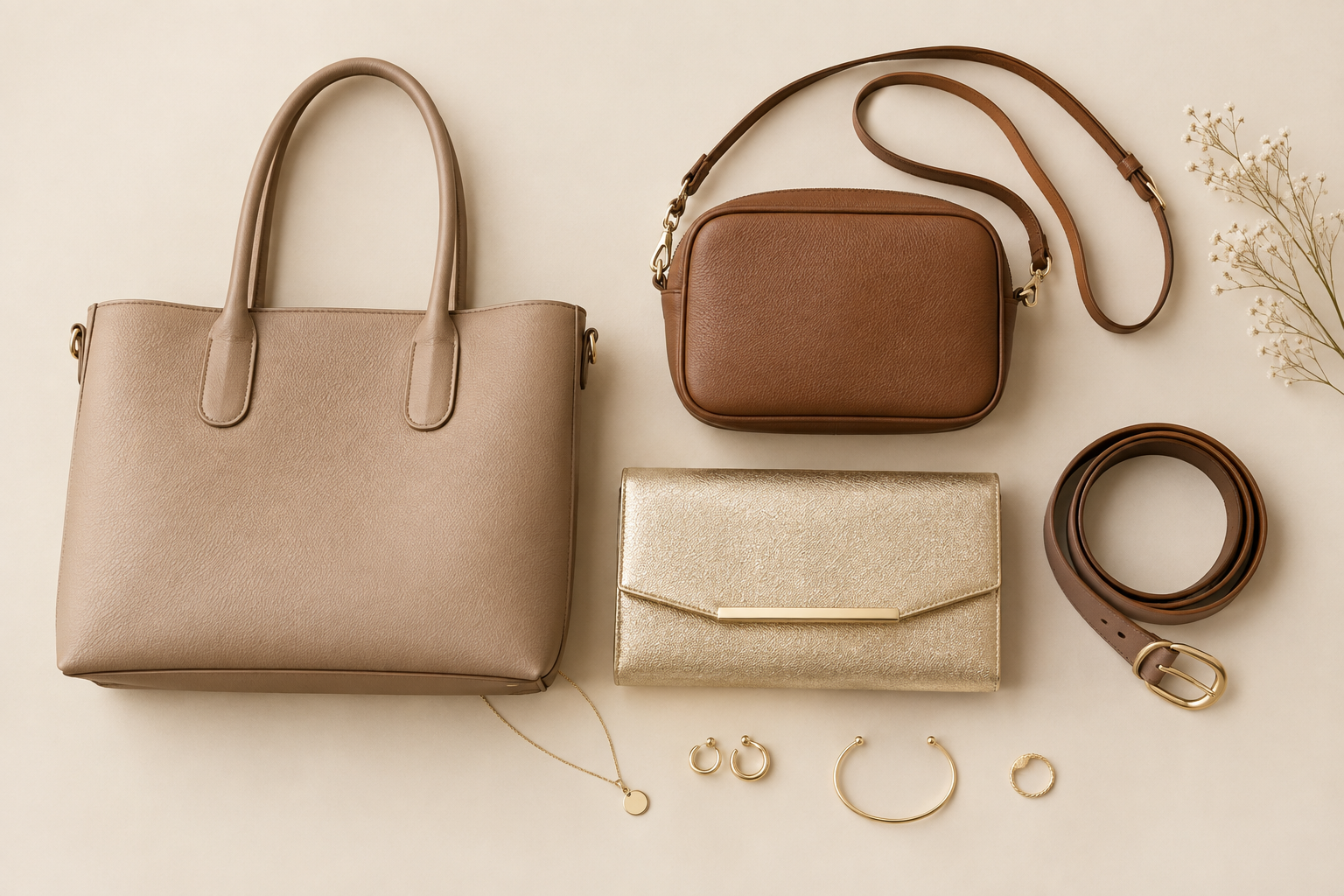
Why Is Choosing Bags and Accessories So Important?
No matter how carefully an outfit is put together, it can feel incomplete without the right bag and accessories. On the other hand, a poorly chosen bag or an over-the-top accessory can push even the most beautiful outfit into the background. Choosing bags and accessories is a process shaped by the purpose of use, the style of the clothing, the conditions of the day, and personal taste.
This guide was prepared not to answer the question "what should I buy?" but to answer "what should I base my choice on?" Because the right choice always comes down to personal need.
Types of Bags and Their Uses
There are dozens of bag styles on the market, but each one has a purpose. Knowing the basic types prevents confusion when shopping.
Tote Bag (Large Shoulder Bag)
One of the most practical options for everyday use. It fits a laptop, planner, and water bottle. It stands out for its functionality when commuting to the office, shopping, or on weekend outings. Fabric versions are both lightweight and eco-friendly.
Crossbody Bag
If you want your hands free, this style is perfect for you. Small and medium-sized versions easily complement everyday outfits. It's also a safe choice for travel; since the bag stays close to your body, it keeps your belongings more secure.
Clutch (Evening Bag)
Indispensable for receptions, weddings, and special evenings. It only fits a phone, money, and small makeup items, so it's not very practical for daily use. It's an ideal choice for completing evening wear and formal occasion outfits.
Backpack
Great especially for students and those with an active lifestyle. Ergonomically designed models reduce shoulder and back pain. Stylish leather versions can now easily be used in office settings as well.
Mini Bag
A trend-driven option. It adds flair to an outfit on days when you don't need to carry much, or for evening outings. However, you should keep your expectations for functionality low.
Things to Consider When Choosing Accessories
Accessories cover many items such as jewelry, belts, scarves, hats, and glasses. You can consider the following criteria for choosing the right accessories:
Create Balance with Your Outfit
Simple accessories pair better with patterned and colorful clothing. If you're wearing a simple outfit, a bolder (eye-catching) accessory can liven up the look. The rule is simple: either let the outfit speak, or let the accessory.
Stick to One Metal Tone
Mixing gold and silver tones in the same outfit is no longer considered a rule violation, but choosing a single tone is safer to start with. If the metal tone of your watch matches your earrings, you take your outfit one step further.
Necklace Length According to Your Height
Long chain necklaces can make shorter women appear taller. For round face shapes, long and thin necklaces create a slimmer appearance. However, these are general tendencies; anything that makes you feel good is the right choice.
Don't Forget the Belt
A belt is both a functional and stylistic accessory. Using a belt to cinch a loose-fitting dress or shirt defines the silhouette. A thin leather belt frequently works well in dress outfits.
Common Mistakes in Choosing Bags and Accessories
- Trying to carry everything at once: Choosing an oversized bag and filling it up creates both a physical burden and visual clutter. Determine your list of needs and choose the size accordingly.
- Ignoring quality: Cheap materials deteriorate quickly. Pay attention to stitching quality, zipper durability, and strap strength, especially in bags you use frequently.
- Forcing color coordination: Neutral colors (black, cream, brown, navy) that go with any outfit are safe choices for bags. Colorful bags should be purchased for specific outfits.
- Accessory overload: Wearing earrings, a necklace, a bracelet, and a ring all at once can overwhelm an outfit. Highlight one piece and keep the others simple.
- Not considering proportion relative to body size: A very small bag can look disproportionate on larger-framed women; a very large bag can look overwhelming on smaller-framed women. The general rule: the bag should not go past hip level.
Essential Bag and Accessory Checklist
You can use this list as a guide for the essential pieces you should have in your wardrobe:
- ✅ Black medium-sized crossbody or shoulder bag (goes with any outfit)
- ✅ Large tote bag (for work and everyday use)
- ✅ Evening bag / clutch (for formal occasions)
- ✅ Neutral-colored belt (black or brown leather)
- ✅ A simple pair of earrings (studs and hoops)
- ✅ Thin chain necklace (versatile use)
- ✅ Sunglasses (both protective and stylistic)
These essential pieces are consistent with the capsule wardrobe philosophy and represent long-term investments.
Choosing a Bag to Match Your Outfit: A Quick Guide
Which bag suits which outfit? Here's a quick summary:
- Casual everyday outfit (everyday wear): Tote bag or crossbody
- Office outfit (office wear): Structured shoulder bag or briefcase
- Formal occasions and evening wear: Clutch or mini chain bag
- Sports and active days (sportswear): Backpack or belt bag
- Beach and vacation (beach wear and swimwear): Straw or large fabric bag
Frequently Asked Questions
Should the bag color match the outfit?
No, it's not required. The same color tone can look harmonious, but contrasting colors can also look very stylish when used correctly. What matters is that the colors don't clash; for this, you can use the color wheel logic or a neutral-and-color combination.
Which bag style is more suitable for plus-size women?
Medium and large bags generally look more proportionate. Very small mini bags can disrupt the visual balance. However, this is a suggestion, not a rule; anything that makes you feel good is the right choice. You can also find similar tips in our plus-size fashion guide.
How can I tell if a bag is good quality?
Look at the evenness of the stitching, the smoothness of the zipper, the quality of the inner lining, and the sturdiness of the strap attachment points. For leather bags, the smoothness of the surface and the scent are also quality indicators. If possible, pick up the bag and examine it in person.
How many bags are enough?
This entirely depends on your lifestyle. But as a basic rule, one everyday bag, one bag for work, and one clutch for evenings will cover most needs. If you adopt a minimalist approach, even a single versatile neutral-colored model may be sufficient.
How should accessories be cared for?
Silver jewelry can tarnish with air exposure; store it in a closed box when not in use. Wipe leather bags with a damp cloth and don't leave them in direct sunlight. Wash fabric bags according to the manufacturer's instructions. For detailed care information, you can check out the fabric and care guide.